hlebook.com


Revive your antique pinfire firearms


7mm01.jpg (41260 octets)

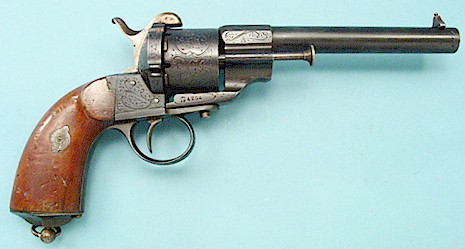
7mm Belgian made pinfire revolver

IMG_3136.jpg (26698 octets)

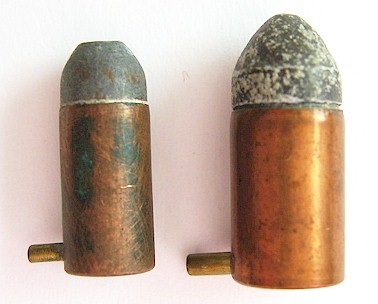
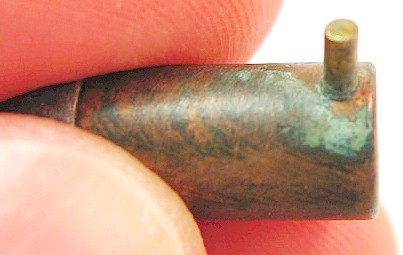
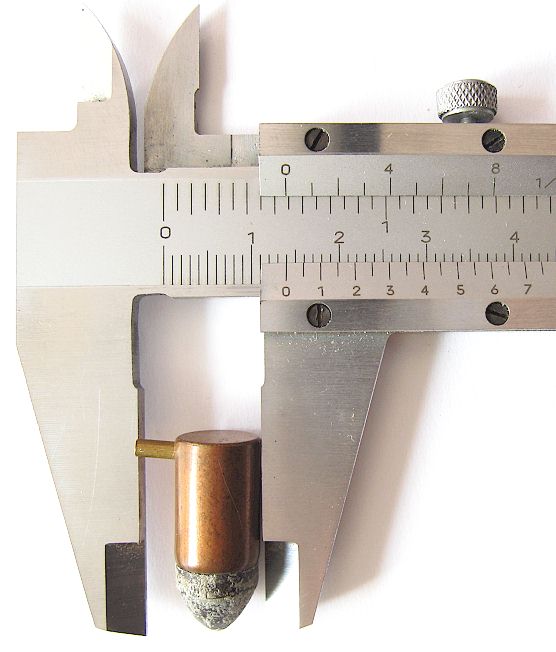
Vintage pinfire cartridges
Left : 7mm - Right 9mm


IMG_3137.jpg (31168 octets)

IMG_3138.jpg (23657 octets)


To revive vintage pinfire handguns today is not a simple matter. Of sure, you will find here and there some vintage pinfire cartridges made about 100 years ago at prices in accordance with their rarity (sometimes $50 a piece), but it is not certain - to say the least - that the old primer mixture will again ignite the powder when crushing the pin.


pin12mm.jpg (30774 octets)

11/12mm reloading kit is AVAILABLE

KITS PRICE LIST


Reloading kit for pinfire cartridges (7mm & 9mm)


IMG_3113.jpg (94250 octets)

9mm pinfire basic kit
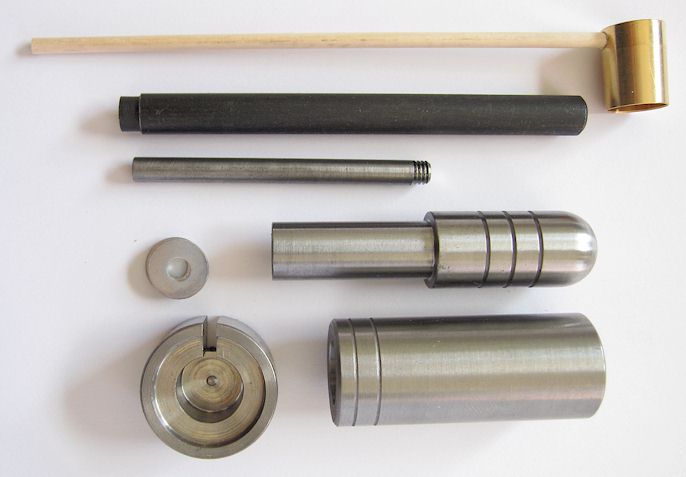
Content (packed in wood box) : 9mm pinfire dies and tools + 12 reloadable cases + 12 percussion cap holders + 1 powder measuring cup + 12 firing pins + 25 lead bullets

IMG_3114.jpg (68691 octets)

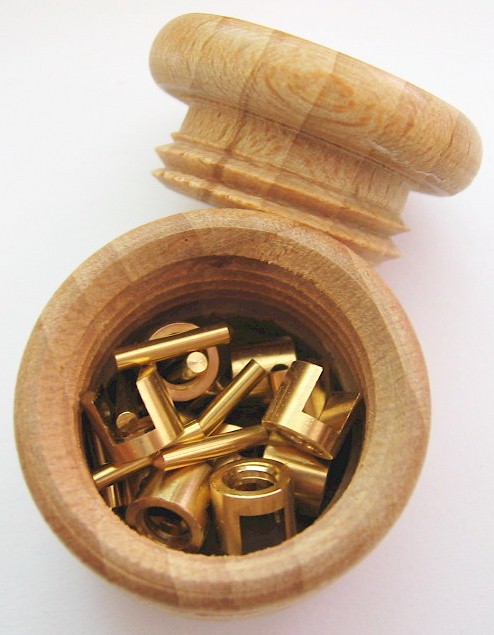
Firing pins and cap holders are stored in a pretty threaded wood box (French fashion !!!)

broche.jpg (59770 octets)

KITS PRICE LIST


How does it work

IMG_3121.jpg (8962 octets)   IMG_3122.jpg (6959 octets)

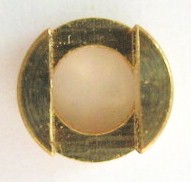
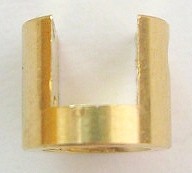
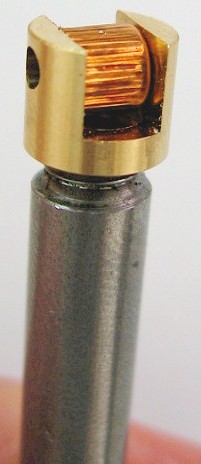
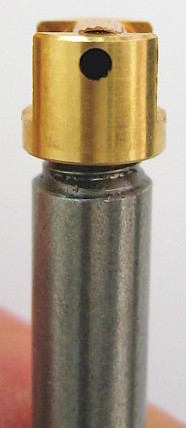
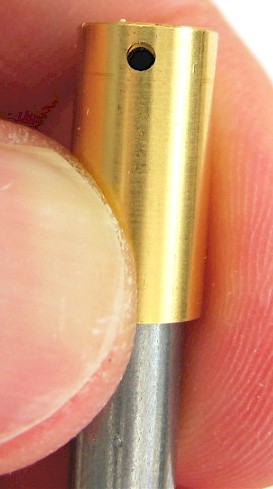
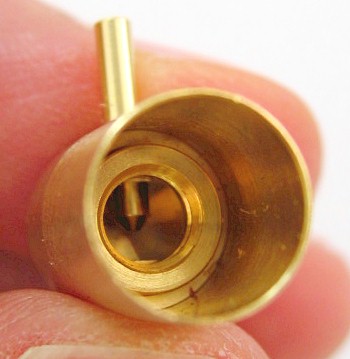
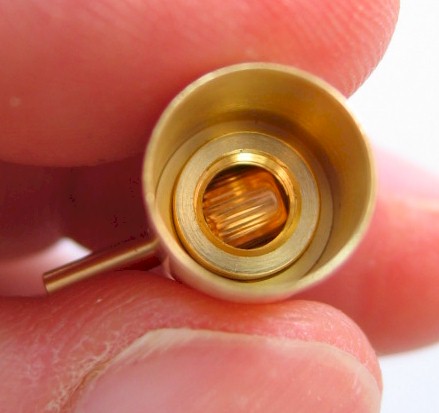
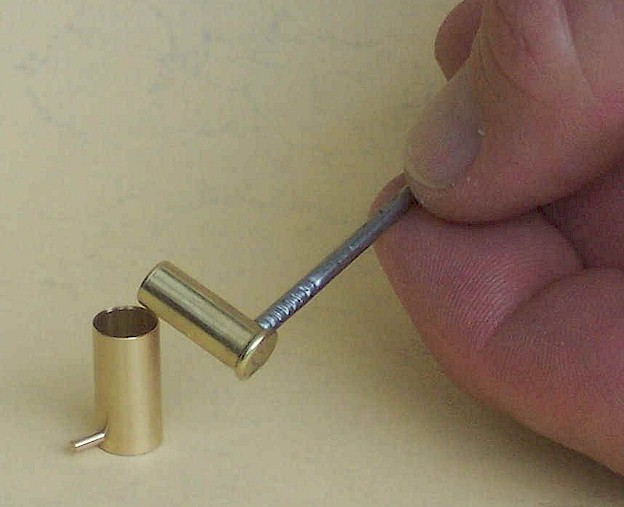
One quite inovative element of this kit is the threaded percussion cap holder. It is a  massive piece of brass which no doubt can be used several times before being out of usage.


IMG_3124.jpg (16243 octets)

IMG_3125.jpg (22763 octets)

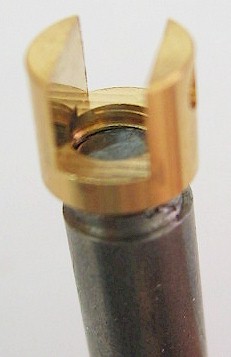
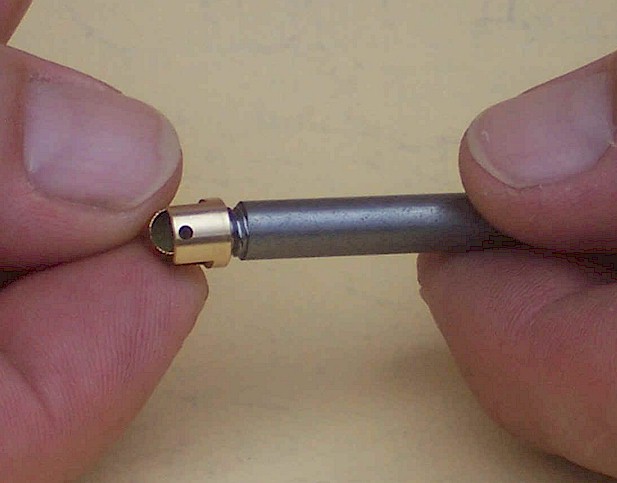
Being threaded at its base, the holder can accomodate a rod that will help greatly to position the holder inside the cartridge case.

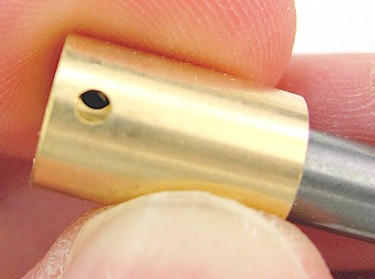
Note that each kit (7mm or 9mm) has its own specific cap holder with different technical caracteristics (the hole section). The firing pins of both kits being of different size and thickness.


IMG_3118.jpg (15262 octets)     IMG_3119.jpg (16435 octets)

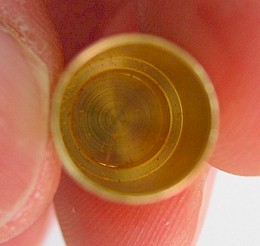
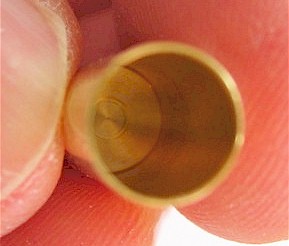
The inside bottom of the 9mm case (left picture above) is thicker - with a shoulder - to adapt the cap holder, while the 7mm case is straight with the cap holder sliding in it with a little play.


IMG_3130.jpg (21099 octets)


1) Screw the threaded rod to the base of the percussion cap holder, and slide a fresh cap into the holder with the cap's opening facing the small hole in the holder.


IMG_3133.jpg (18493 octets)                       IMG_3134.jpg (30409 octets)

Note that the percussion cap MUST be flush with the holder. If it remains beyond the holder's edge, as shown above, the holder pin hole, and the case pin hole, will not aligne perfectly and you will have difficulties to enter the firing pin.

cci.jpg (17188 octets)

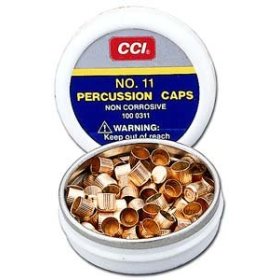
Percussion caps no 11 by CCI.


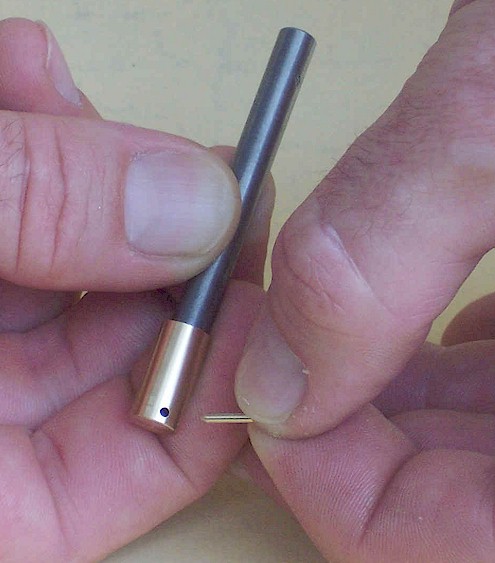
2) Drive the cap holder to the bottom of the cartridge case, and insert the firing pin through the case hole into the hole of the cap holder.


IMG_3129.jpg (26755 octets)

Percussion cap not installed

IMG_3155.jpg (32570 octets)

Percussion cap installed

The cap holder is now retained in the bottom of the case by the firing pin. Note that when sticking the pin into the case, you can add before a drop of glue on the pin.

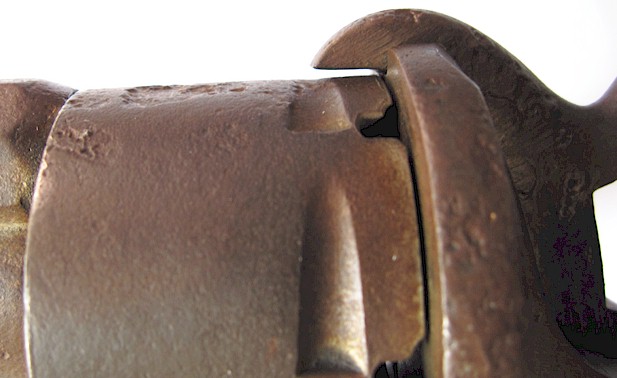
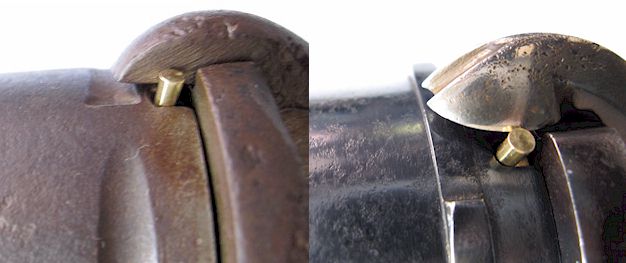
WARNING ! Before adding the bullet it is HIGHLY recommended to test one blank cartridge in the gun you intend to use. Especially if it is a revolver. You must be certain that the pin is - or can be - sufficiently pushed inside the case to allow a free rotation of the cylinder. It may be necessary in some cases to grind down the firing pin.


3) Unscrew the threaded rod from the cap holder, and fill the case with the right quantity of black powder.

Note that :

- for the 7mm caliber any black powder should work (coarse to fine granulation - Fg to FFFg). But if your gun is in very good shape, you can chose a fast burning powder with a finer granulation (FFFg).

- for the 9mm caliber, you should use a fast (fine granulation) powder (FFFg or FFFFg) because of  the bullet important dragging inside the barrel, and the rather short case capacity.

The good choice will eventually be the result of experimenting different loads with your own gun.

You should not leave any gap of air between the powder and the bullet. Of course when filling the case you must leave enough space above the powder to allow the seating of the bullet into the case.

Black Powder comes in four granulations. Fg being the coarsest (slowest to burn), and FFFFg being the finest (fastest to burn). You will find the same grades under the following labels : 1Fg to 4fg or even 1F to 4F

Warning ! From now on, a sufficient blow onto the pin can ignite the primer and the powder.


express.jpg (31493 octets)

Federal law allows unlicensed individuals to possess no more than 50 pounds of commercially manufactured black powder for use in antique firearms or replicas and reproductions of antique firearms for hunting, sporting or cultural purposes only.  Any other use of black powder is a felony.  Local ordinances may further restrict the possession and storage of black powder,  It is your responsibility to know and obey local statutes and regulations.


IMG_3146.jpg (35941 octets)


IMG_3120.jpg (33467 octets)

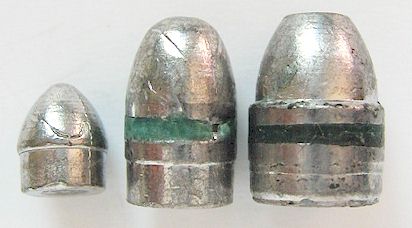
Left : 7mm (about 4 grams) - Mid : 9mm (about 9 grams) - Right : 12mm (about 10,80 grams)


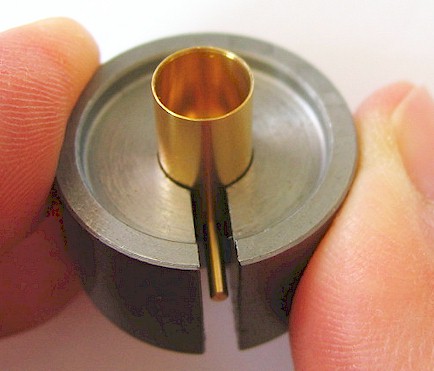
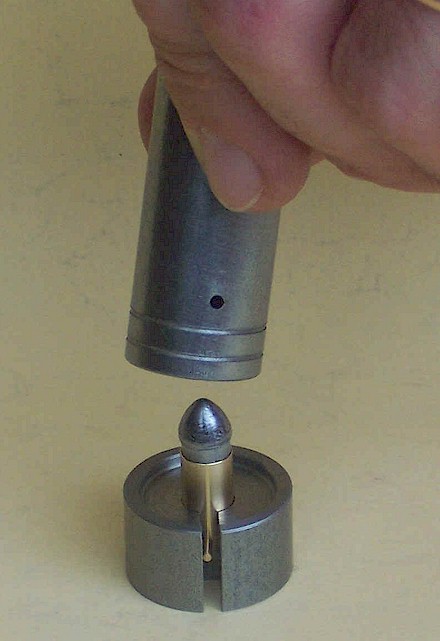
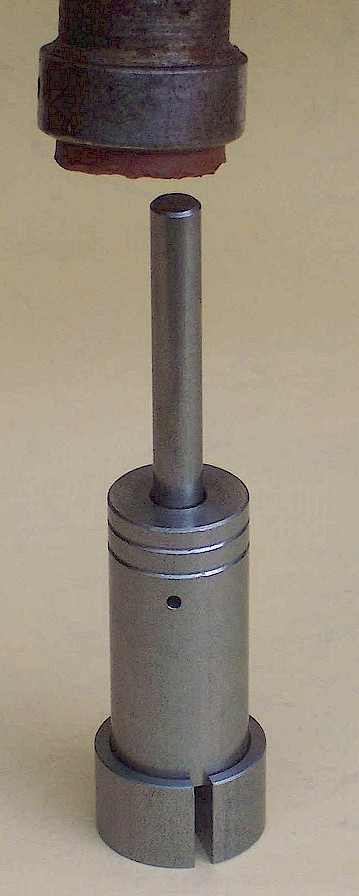
4) Place the cartridge case on the slitted basement as shown above, and place a bullet onto the case opening. Then put the crimper block on the basement.

You will note that the bullet is shaped with a shoulder. This will help you to know how deep the bullet must be pushed inside the case. All the bullet body under the shoulder must be inside the case.


cartlube01.jpg (14889 octets)
LYMAN SUPER MOLY DRY LUBE Size: 6 oz

cartlube03.jpg (6391 octets)
RCBS PISTOL BULLET LUBRICANT


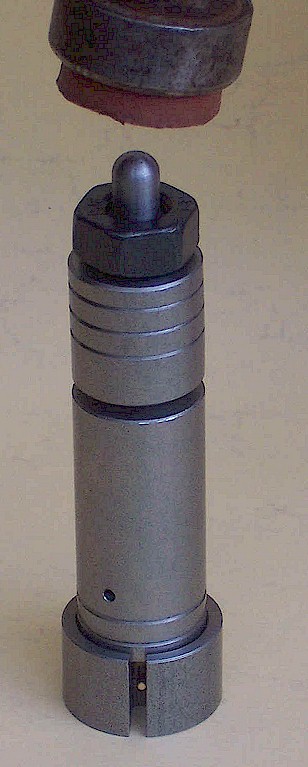
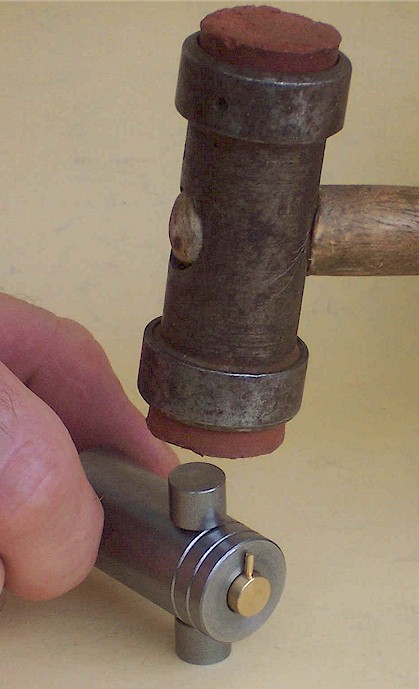
5) Inserting the bullet into the case with the required deepness, is precisely done thanks to a pushing tool.

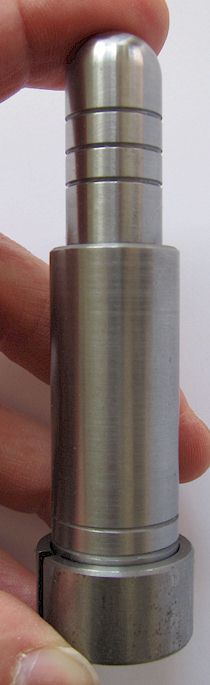
This tool is a cylindrical casing into which is screwed a large rod with a concave under face to mate the bullet head profile, and a nut on its upper portion to set the right deepness of the rod that slides into the crimper block channel.

To determine the exact deepness you will install the first bullet by pushing it through the pushing tool (using a light non marring hammer) until you feel - or better you see - that the bullet shoulder is at the cartridge case upper edge level.

Then, while maintaining the pushing rod in contact with the bullet's head, turn the pushing tool casing down until it is against the crimper block. When it is done, screw firmly the nut against the casing.

The pushing rod is set now at the right deepness for the cartridges to come.

For the next cartidges, just install the bullet on the case, put the pushing tool on the crimper block, and use a mallet to drive the bullet inside the case through the pushing tool rod (which is now firmly locked at the right height  to the pushing body by the nut).


CRIMPING PUNCHES NO LONGER FURNISHED
(Considered unuseful)

6) If for any reason you want the bullet to be more crimped by the case, you can use the two small punches furnished to this effect.

The two punches must be inserted in the lateral holes of the crimper block as shown above. The space between the punches and the crimper block surface indicates the deepness of the penetration into the cartridge case when the blow will occur.

Take care to not puncture the cartridge case when performing this additionnal crimping.

To prevent a possible perforation of the cartridge case you can :

- Adjust the punches length by filing them down.
- Or add a strip of adhesive tape around the crimper block to enlarge its diameter to the required thickness.
- Or add washers to the punches.


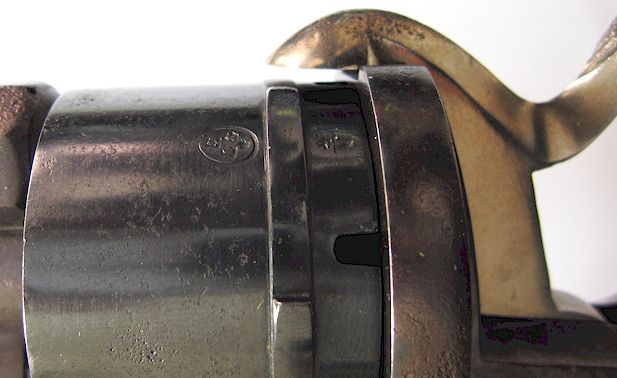
In some revolvers, the firing pin, when positioned vertically, can affect the good rotation of the cylinder. You can solve the problem by slightly slanting (about 3 degrees) the firing pin toward the rear.


AFTER FIRING :

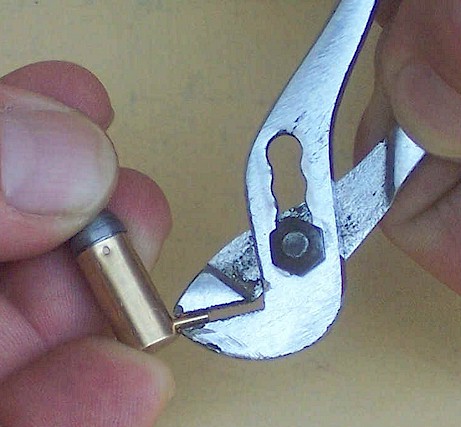
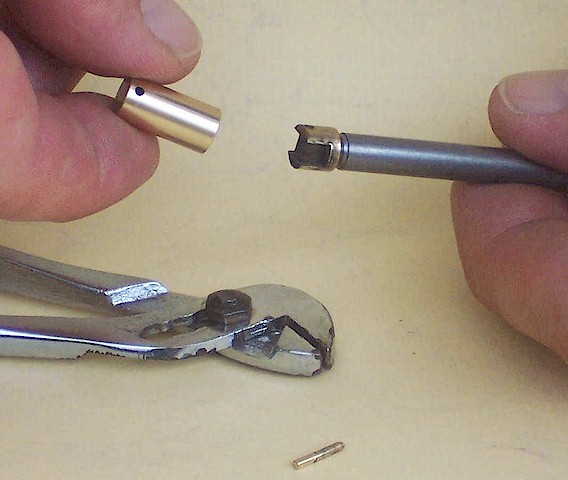
1) De-caping

Remove the firing pin. Screw the threaded rod into the percussion cap holder, and pull it out of the cartridge case.

If you want to re-use the case and the cap holder, do not forget to clean them. You can use hot water with some sort of current ammoniacal detergent.


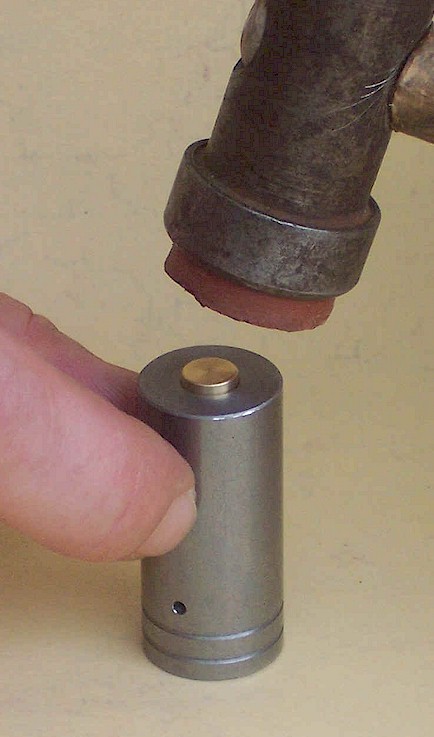
8) To resize the case, use the crimper block as a swaging die (shown above). Do not forget to externally lubricate the case before forcing it into the tool.


9) When the case is resized, eject it with the rod furnished to this effect, by pushing it out of the crimper block as shown above. The case is now ready for another reloading.

If used in rather well calibrated guns with clean smooth chambers such cases should be reloaded five or six times before being discarded as a safety measure. But ALWAYS check attentively the case before any re-use. And specialy in the weaker area of the firing pin hole.


Test the 7mm Pinfire with our Mini Kit

IMG_3153.jpg (29064 octets)

Content : 5 lead bullets + 5 cartridge cases + 5 firing pins + 5 percussion cap holders, and a screw to hold the cap holder.
Note that percussion cap shown are removed when shipping to the USA

This starting Mini Kit is sold for : US$36,00 Shipping by unregistered mail included

Instant purchase with Paypal


IMG_3311.jpg (32976 octets)
Test the 9mm Pinfire with our Mini Kit
same as above but in 9mm

Content : 5 lead bullets + 5 cartridge cases + 5 firing pins + 5 percussion cap holders.
Note that percussion cap shown are removed when shipping to the USA

This starting Mini Kit is sold for : US$36,00 Shipping by unregistered mail included


Test the 11/12mm Pinfire with our Starter Kit

IMG3604.jpg (20515 octets)

Content : 5 lead bullets + 5 cartridge cases + 5 firing pins + 5 percussion cap holders.
Note that percussion cap shown are removed when shipping to the USA

This starting Mini Kit is sold for : US$38,00 Shipping by unregistered mail included


Basic one shell 16 gauge caliber kit
for pinfire shotgun

User manual click here

IMG_4021.jpg (19120 octets)

Includes a brass case, a cap holder, a firing pin and a long screw

$32,00 shipping included (out of Europe shipment)


21,00 Euros shipping included (Europe shipment)


RELOADING KITS PRICE LIST


clean01.jpg (11231 octets)

Lyman Butch's Bore Shine Black Powder Mfg no: 02949

Product Description
Butch's Black Powder Bore Shine was developed specifically for the Black Powder Shooter who asked for a better, faster way to clean their rifles. Butch's Black Powder Bore Shine comes from a special cleaning solvent used by the US Military. The Black Powder bore cleaner, like the original Bore Shine does it all. Removes powder, lead and plastic fouling faster than any other cleaner. Best of all it is odorless, non-toxic, non-flammable, biodegradable and protects against rust and corrosion. You can't find a better cleaner for black powder anywhere., Size / Style: Black Powder, Mfg No: 02949, Manufacturer: Lyman, Shipping Information, Weight: 0.65 pounds., Dimensions: 3.125 (L) x 1.25 (W) x 6 (H) inches.


22021_1.jpg (17273 octets)

SYSTEM LEFAUCHEUX by Chris Curtis

Click here for more info


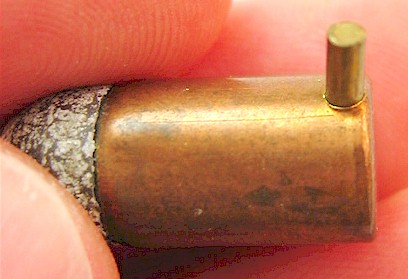
SYSTEM LEFAUCHEUX, Continuing Study of PINFIRE CARTRIDGE ARMS Including their role in the American Civil War by Chris C. Curtis. This 11 1/2 inch by 9 inch, 312 page book has 329 black and white photos; 80 patent drawings, document and historical advertisement illustrations; shows 53 inspection and proof marks used on pinfire guns; 70 illustrations of head stamps used on pinfire cartridges. The Pinfire was invented in 1835 by Casimir Lefaucheuux and was the first practical breech-loading system for shotguns, handguns and rifles. Pinfires were the first metallic cartridges for military revolvers and during the American Civil War was the forth most commonly used revolver surpassed in numbers only by Colt, Remington and Starr. The double barrel break-open shotgun used commonly today was first invented and used for pinfire shotgun shells in 1835. The name PINFIRE comes from the design of the cartridge which has a pin sticking out the side, when struck, fired the shell (see photo of cartridge below). The book covers the design, development, and manufacture of the pinfire arms and ammunition from the simplest single shot pistol to rarities like 20 shot revolvers, plus technical data, patents, commercial sales, military contracts and much more.

H&L Home Page
Email : Pro1258@skynet.be


KITS PRICE LIST

Pinfire Prices

7mm
9mm
11/12mm
16 gauge

16 gauge pinfire shotgun user manual


Centerfire

11mm for French Model 1873/74


Priced in Auctions

Luger Pistols
Mauser Pistols
Walther Pistols

Various German

Astra Pistols
Beretta Pistols
CZ Pistols
FN Pistols
Spanish Pistols
Webley Pistols
Various Makes

Colt Auto Pistols
Colt 1900 Series
Colt 1911 Series
Colt 1903/08 Hammerless
Colt 1908 Vest Pocket
Colt Woodsman
Colt New Models

Colt Revolvers
Colt Long Arms
Colt Derringers
Colt Dragoon Revolver
Colt Frontier Revolver
Colt Long Arms
Colt Model 1849 Revolver
Colt Model 1851 Revolver
Colt Model 1860 Revolver
Colt Model 1861 Revolver
Colt Model 1862 Police
Colt Model 1865 Revolver
Colt Model 1877 Revolver
Colt Model 1878 DA Revolver
Colt New Line revolvers
Colt New Service
Colt Single Action Army
Colt Single Action Revolver
Various Colt Revolvers

U.S. Handguns
Auto Pistols

Derringers
Pepperbox
Pocket Pistols
Revolvers
Single-Shot Pistols

Winchester Firearms

Shotguns
Percussion shotguns
Hammer shotguns
Hammerless shotguns
Drillings

US Antique Guns
Breechloading Long Arms

Flintlock Long Arms
Flintlock Pistol
Percussion Long Arms
Percussion Pistol

Kentucky Pistols
Kentucky Rifles

A.H. Waters
Burnside
Harpers Ferry
J. Henry
Other Makes
Remington
Sharps
Simeon North
Springfield

European Revolvers
Belgian Revolvers

English Revolvers
French Revolvers
Italian Revolvers
Other Countries

Pinfire Revolvers
Pinfire Pistols
Pinfire Shotguns

Lefaucheux Revolvers

Nagant Revolvers
St. Etienne Revolvers
Webley Revolvers
Other Makes

Japanese Firearms
Japanese Revolvers
Japanese Semi-Auto Pistols

Japanese Antique Firearms


Blade and pistol
Cane rifle
Cartridges
Firearms curiosities
Flintlock
Knives
Mutiple barrel pistols
Palm pistols
Percussion pistols
Pin-Fire guns
Pocket guns
Powder flasks
Target pistols
Turret firearms
Wheel Lock


Books on The American Revolution

American Generals of the Revolutionary War: A Biographical DictionaryThe American Partisan: Henry Lee and the Struggle for Independence, 1776-1780The American RevolutionThe American Revolution